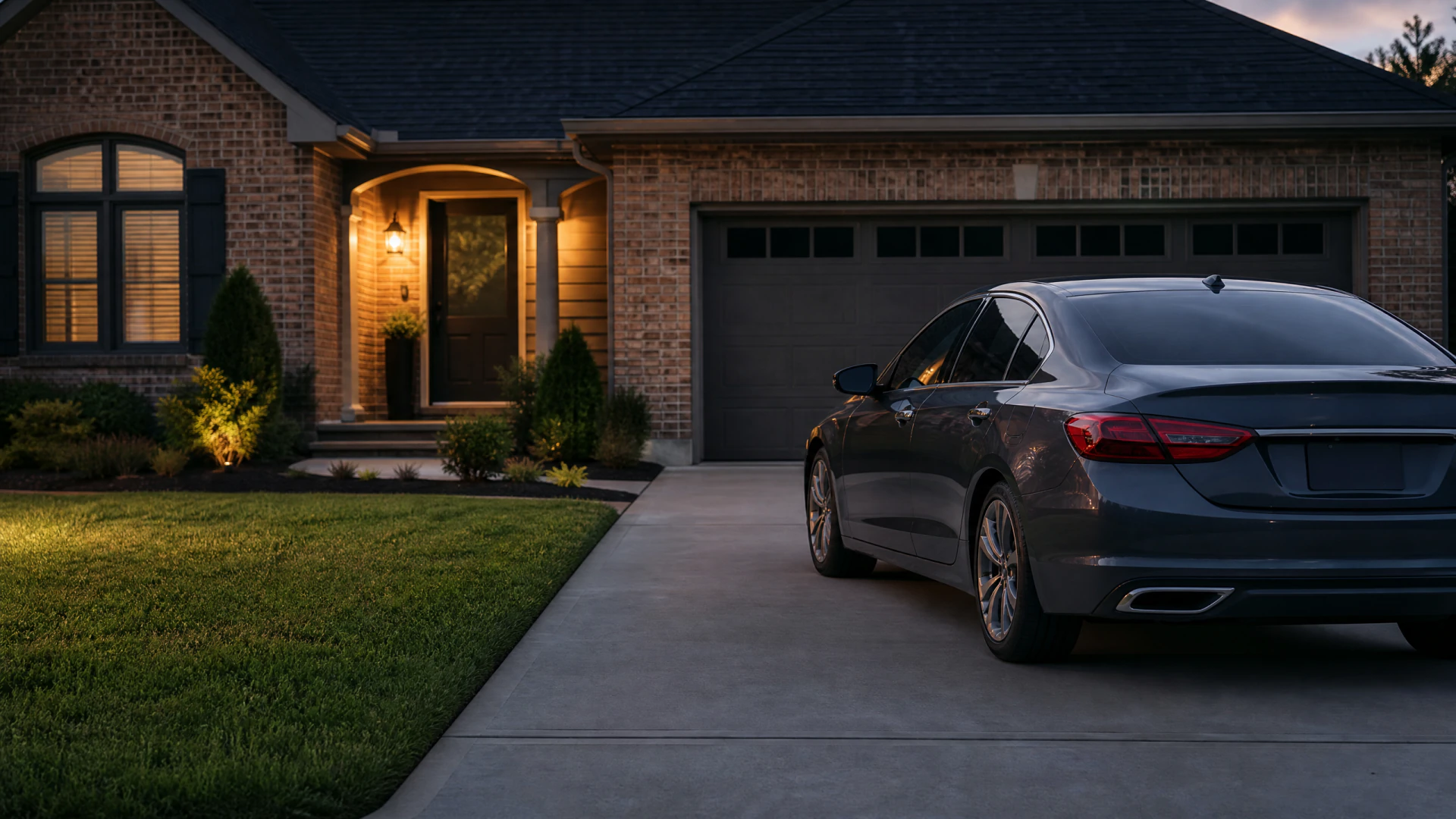
Car Insurance for New Homeowners
You just bought a home and your car insurance is one more thing to sort out, so here's exactly what to look at and what to leave alone.
Free to compare
Your address just did more than change your mail
Moving resets the facts your car insurance is built on. Your insurer prices your policy partly on where the car sits overnight, what your new commute looks like, and whether it's parked on a street or tucked into a garage. All of that just shifted, even if you didn't change jobs or buy a new car.
You also now own a home that needs its own policy, usually bought in a hurry to satisfy a lender. That policy and your car policy don't have to live separately. Many insurers look at both together, and having both changes what they'll offer you on each one.
None of this means your old policy is wrong. It means the numbers it was built on are outdated, and it's worth finding out what new ones would produce.

A few things set your price, and you can influence most of them
Where you live matters, since insurers track accident and theft patterns by area, and a new zip code can move your rate up or down regardless of how you drive. Where the car is parked overnight matters too. A garage or a driveway generally reads as safer than an open street.
Your coverage limits matter as much as your address. Many first homeowners are still carrying the minimum limits they picked years ago, before they owned something worth protecting. Now that you have home equity and other assets a lawsuit could reach, raising your liability limits is one of the few changes that's entirely up to you.
Bundling your car and home policies with one insurer can also lower both prices, though not always, and not by the same amount with every company. It's worth asking for the bundled price and the separate prices and comparing before you assume either one wins.
The overpaying usually happens quietly, not all at once
The most common mistake is doing nothing. People update their mailing address and leave the rest of the policy untouched, so it keeps pricing a car and a commute that no longer exist. That inertia almost always costs more than the effort of a quick review.
The second mistake is bundling without checking the math. A bundle discount can still cost more than buying the two policies from different insurers, especially if one of them specializes in homes like yours or cars like yours. The discount is a starting point for comparing, not a reason to stop.
The third is adjusting limits without knowing why. Raising liability coverage because you now have more to protect is smart. Padding every number out of general anxiety about homeownership just raises your premium for coverage you may not need. Know what each limit is for before you change it.
Now that you know what changed, compare quotes with your new address, garage, and limits in mind.
Articles
 When Your Car Damages Your Home or Garage
 Credit and Car Insurance After a Mortgage
 Garage Parking and Your Premium