Will My Insurance Go Up if I Got Hit in a Parking Lot
If the other driver was clearly at fault and their insurer pays, your rate typically stays the same.
Rates respond to fault and who pays, not just that a claim happened
Insurers set your rate based on risk, and risk is mostly about whether you caused the loss. When another driver hits your parked car and it's clearly their fault, their insurance pays for the damage, not yours. Since you didn't cause anything and your policy never paid out, there's usually nothing on your record that signals you're a higher risk to insure.
Problems show up when fault is unclear. Parking lot accidents often have no police report and no witnesses, so sometimes fault gets split between both drivers even if you think you weren't to blame. If your insurer assigns you any share of fault, that can affect your rate, because now their money is on the line for a loss you partly caused.
It also matters whose insurance actually pays. If you use your own collision coverage to get your car fixed quickly instead of waiting on the other driver's insurer, some companies treat that as a claim against you even if you're later reimbursed. Ask your insurer directly how they handle at-fault reimbursement claims, because this varies by company and sometimes by state.
Finally, a single minor incident with no fault on your side rarely moves the needle much, if at all. What insurers watch for is a pattern, several claims in a short stretch, not one clean, not-your-fault event. So the real question isn't whether a claim exists, it's whose fault it was and who ended up paying.
Should I even file a claim for a parking lot accident?
File a claim if the damage costs more to fix than you're comfortable paying yourself, or if you're unsure who's at fault and want your insurer to sort it out. That's what the coverage is for, and avoiding it out of fear of a rate increase often costs you more in repairs than it saves.
If the damage is small and the other driver is clearly at fault with contact information exchanged, you can go straight to their insurer instead of touching your own policy. This keeps your claims history clean and still gets your car fixed. If there's any ambiguity about fault, though, loop in your own insurer early so you have support if the other side disputes it.
What raises your rate isn't the accident, it's who's found at fault and whose policy actually pays.
Once you know how this claim will likely be handled, compare quotes to see if your current rate still makes sense.
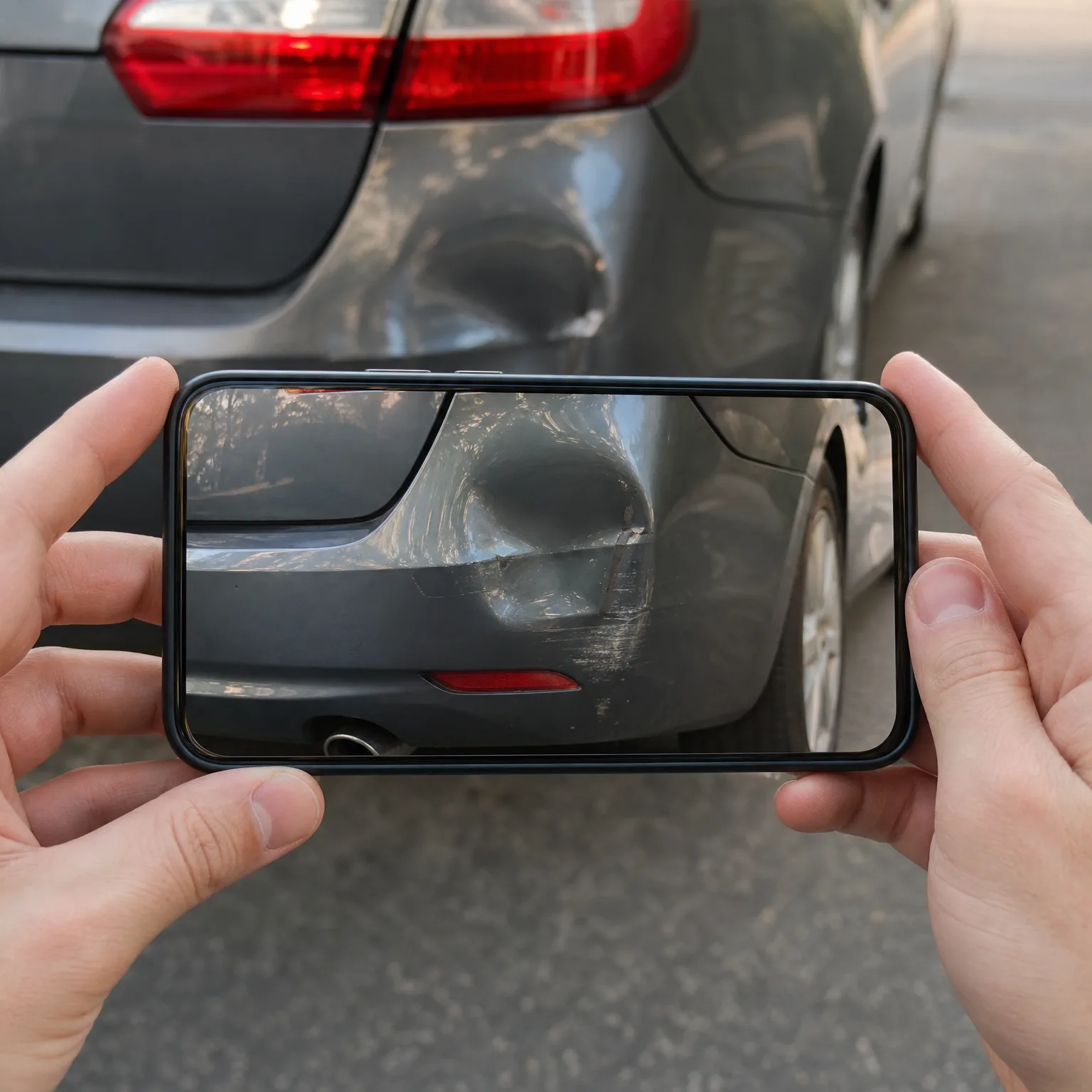
What actually determines whether your rate moves
- Who's at fault If you're not at fault at all, your rate is unlikely to change. Get photos, witness info, and any available footage so fault is clear and not left to guesswork.
- Who pays the bill Letting the at-fault driver's insurer pay keeps the claim off your own record. Using your own collision coverage first can count against you even when you're reimbursed later.
- No police report filed Without a report, fault can become a he-said-she-said situation. Ask the lot's property manager if they have cameras, and file a report with local police if your state allows it for private property.
- Your claims history pattern One not-at-fault claim rarely matters, but several claims close together will. Keep track of how many claims you've filed in the past few years before deciding whether to file this one.
- Your specific insurer's rules Companies differ on how they treat shared fault, small claims, and reimbursed claims. Call your insurer and ask directly how this type of accident gets classified before you decide how to proceed.

Does filing a claim always show up on my driving record?
No, a claim where you're not at fault typically doesn't appear as a mark against your driving record, though it may still appear in your claims history with that insurer. Driving records usually track violations and at-fault accidents, not every claim filed. Check with your state's DMV rules and your insurer's own policy, since what counts as a reportable event differs by both.
How long does a parking lot accident affect my insurance?
If you're found at fault, the effect typically fades after a few years, though the exact timeframe depends on your insurer and state rules. If you're not at fault, it generally shouldn't affect your rate at any point, since the loss wasn't caused by your driving. Ask your insurer how long at-fault incidents factor into pricing so you know when, if ever, this stops mattering.
What if the other driver left without leaving information?
If the other driver fled, this becomes a hit-and-run claim, which your own insurer may cover under uninsured motorist or collision coverage depending on what you carry. Report it to police right away, since many insurers require a report for hit-and-run claims. Whether this affects your rate depends on your insurer's treatment of no-fault, unidentified-driver claims, so ask them directly.